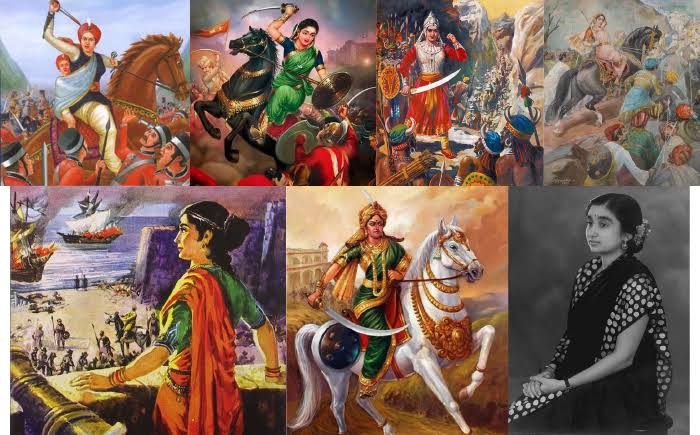
History of India is full of bravery. There have been many such Heroes on the blessed land of India who have presented unique examples of bravery. We know most of brave kings but most of us not know about brave & Legend Queens of our Indian History who presented many examples of their bravery, Legendry, Patriotism & Women power ( Nari Shakti). Today in this blog we will study about some Legend Queens of our Indian History.
1. Rani Laxmi Bai
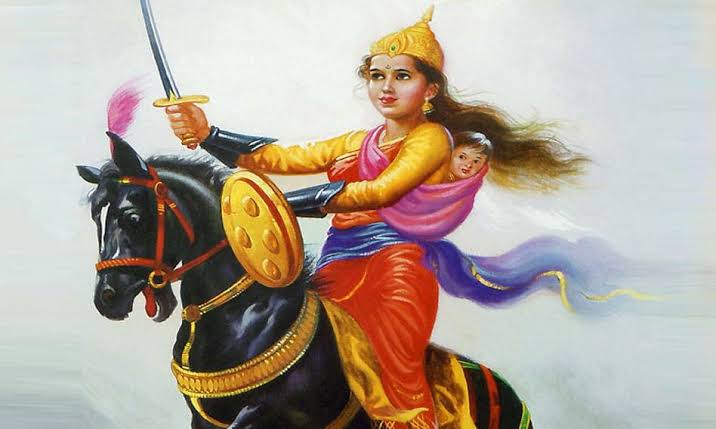
Rani Laxmi Bai was born on 19 November 1828 in a Brahmin Maratha Family. Her father Moropant was an employee in the court of Peshwa Bajirao II. Her childhood name was Manikarnika. Manikarnika was very brave & Patriotic since childhood. She was given name Laxmi Bai when she married to Gangadhar Rao the king of Jhansi. They had a son after some time of Marriage but due to some illness their son was died. After which a serious Disease surrounded the king too. Due to the Deterioration condition of the king, they adopted a son whom named Damodar Das. King declared Damodar Das as his successor. After sometime of this king was died.
Due to the age of succeser is very small Rani Laxmi Bai assumed the throne of After the death of the King. At that time, British rule was over all the India. Britsh Government refuse to accept Damodar Das as a succeser because he was an adopted child & Captured Jhansi. After which Rani Laxmi Bai Fought & Win many battles to liberate India from East India company & forced British Government to return Britain but suddenly in the Phool Badh of Gwalior British army surrounded her & Rani Laxmi Bai martyred in this battle.
2. Rani Padmavati
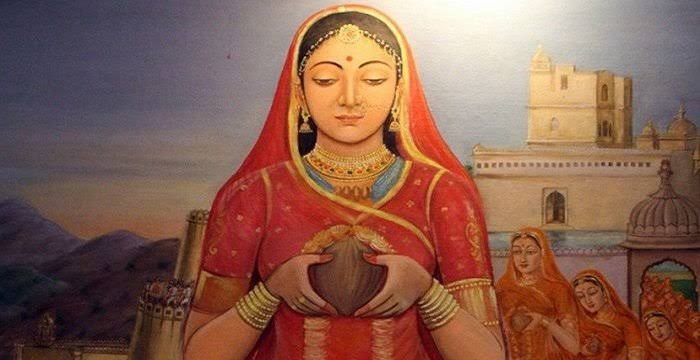
This is the story of 1303 when Allaudin Khilji Capturing forts in india.At this time the ruler of Chittor was Rana Rawal Ratan Singh. His wife Queen ‘Padmavati‘ was very beautiful & intelligent. Her beauty was discussed in all over the world. When Allauddin Khilji heard the beauty gossips of Queen ‘Padmavati’, he thaught of making her his queen. For which he arrested Rana Ratan Singh by deceit in Delhi & demanded Queen Padmavati in return. But Queen ‘Padmavati’ got out Rana Ratan singh from Delhi with her Courage & Intelligence. After failing his trick Khilji attacked chittor fort with a large army. In this war Rana Ratan Singh was killed. After the death of Rana Ratan Singh Queen ‘Padmavati’ sacrifice with 16 thousand queen by jumping in pool of fire to protect her honour from enemy & Khilji’s dream was only a dream, even after so many efforts, he could not even see the face of Queen ‘Padmavati‘ in his whole life.
3. Rani Karnavati
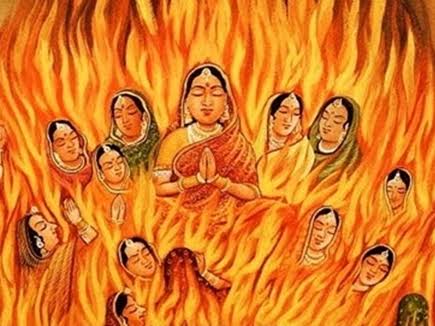
This is the story of 14th Century when Delhi was under the rule of Mughal king Humayun. After the death of Rana Sanga the Rajput army was significantly weakened. Which was benefited by Bahadur Shah, the ruler of Gujrat in 1535. In 1535 Bahadur Shah attacked chittor fort with large army. In this war where Bahadur had lakhs of soldiers & weapons, the same rajput had 30-40 thousand soldiers & they not yet emerged from the mourning of Rana Sanga’s Death. During this war Queen ‘Karnavati’ sent a letter to Humayun for help. As Humayun assured her of eligibility of help at the time of problem. But at that time Humayun refused to help Queen Karnavati & after that Queen Karnavati
did Jauhar with 13000 queen by jumping in pool of fire after seeing Rajput army defeated in battle.
4. Rani Chenamma
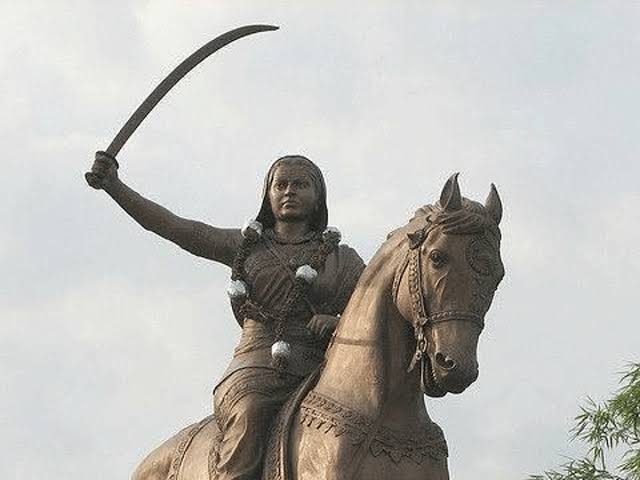
She was born in the small village of Kakati in Belgaum, Karnataka in 1778. From a very young age she received training in sword fighting, archery and horse riding and got private lessons at home. Once King Mallasarja of Kittur was moving around trying to find support from neighbouring kingdoms to fight Tipu Sultan and approached Dhulappa Desai. He then saw Chennamma and was attracted to her confidence and bravery.Though he was already married and had a son Shivalinga Rudra Sarja, he took Chenamma as his second wife. They had a son who died at a young age. King Mallasarja also passed away. It is said that East India company’s collector and political agent Thackeray wished to capture Kittur to expand the British Empire. Rani Chennama now Queen of kittur decided to take charge and rallied together her trusted men to fight against the British. As a conclusion of this war British officers including Thackeray were killed. The remaining officials and soldiers were imprisoned and she ensured that they were treated with courtesy and kindness.
The British Empire was enraged at the humiliation of defeat at the hands of a small ruler and sent bigger armies to Kittur to capture it.. A fierce battle was fought but this time due to a number of traitors in her camp she lost the battle and was captured by the British and their treasury looted.
It is said that such was her indomitable courage and fearlessness that she tried to escape twice from the Kittur fort but was recaptured both times and then put in solitary confinement for life. She spent her days performing pooja and reading the holy texts till her death.In the year 1829 she died in confinement with the dream of a free Kittur in her heart and mind. Her burial place or Samadhi is at Bailhongal taluka surrounded by a small park.
Rani Chennama was a great example of this principle of real living by showing to the world that one woman could stand against the might of the British Empire for upholding justice and righteousness.A statue of Rani Chennamma was inaugurated in Parliament building in New Delhi in the year 2007 by the then president and prime minister. A number of memorials have been set up naming schools, parks etc in her name. Every year her legacy is commemorated from October 22 to 24 during the Kittur Utsava.
5. Rani Abbaka Chowta
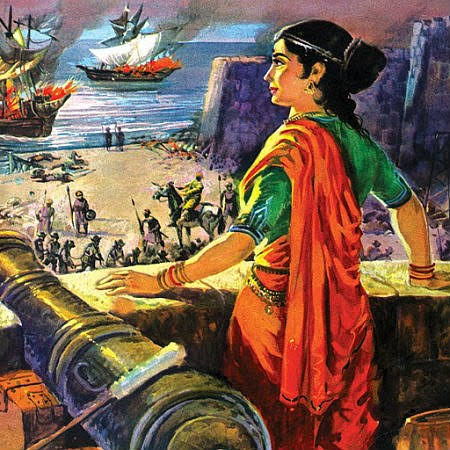
Rani Abbakka, the ruler of Ullal (a town in Mangalore), was the first Tuluva Queen and was called the ‘first woman freedom fighter of India’. Rani Abbakka fought against the Portuguese for over four decades when they trained their eyes towards the South after capturing Goa. Even after she had been captured, she refused to give up and died fighting for freedom. For her monumental bravery, she is still known as Abhaya Rani (the fearless queen) and her stories are incorporated in various folklore and legends.
6. Rani Velu Nachiyar
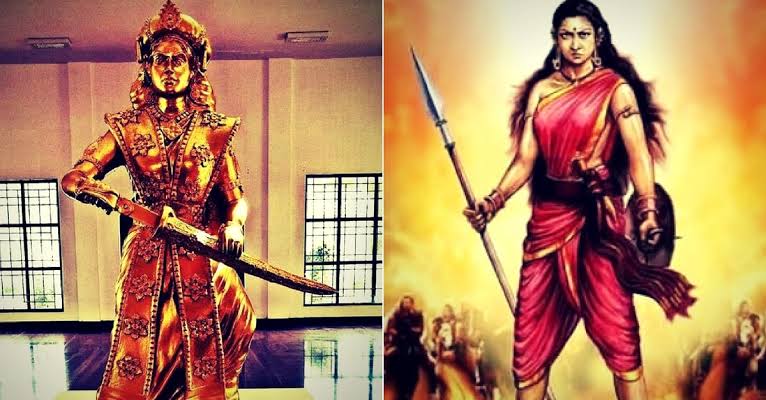
The Queen of Sivaganga, Velu Nachiyar, predates the Ranis of Kittur and Jhansi as the first female freedom fighter against the British. Also known as Veeramangai (brave woman), she was trained in martial arts, horse riding and archery. She was also fluent in French, English and Urdu. After her husband was killed by the British army, she launched an attack against them after seeking refuge with Haider Ali, the Sultan of Mysore. When her daughter was martyred in the fight against the British, the queen formed a women’s army and named it after her. Her fearlessness and gallantry are remembered even today.
7. Rani Ahilyabai Holkar
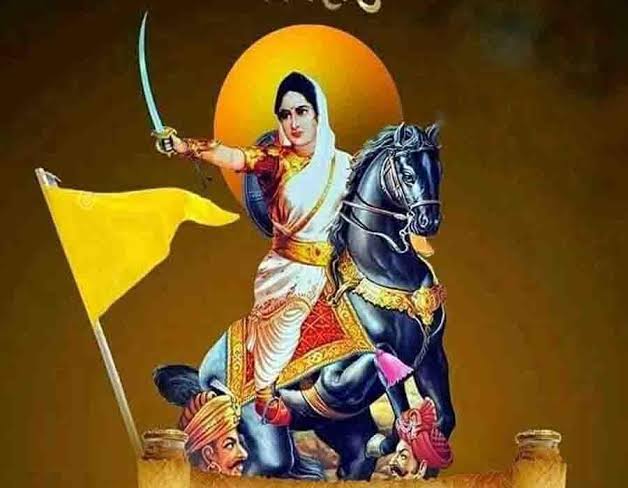
She was born in the village of Chondi in Jamkhed, Ahmednagar in 1725, she was fondly referred to Rajmata Ahilyabai Holkar was the Holkar Queen of the Malwa kingdom. Her father, Mankoji Rao Shinde, was the Patil (chief) of the village. Her father home schooled her to read and write. She was married to Khanderao Holkar in 1733 at the tender age of 8.But unfortunately her husband Khanderao was killed in the battle of Kumbher in 1754, leaving her a widow at only 21. Ahilyabai’s only son Male Rao Holkar ascending the throne under her regency. Young monarch Male Rao too died, a few months into his rule, on 5 April 1767. Ahilyabai stood undeterred even after loosing her entire family.She did not let the grief of her loss affect the administration of the kingdom and the lives of her people. She took matters into her own hands. She petitioned the Peshwa after her son’s death, to take over the administration herself. She ascended the throne and became the ruler of Indore on 11 December 1767. The supreme ruler of the Empire, Peshwa Raghoba, was instigated by one of Ahilyabai’s own ministers to confiscate the excess wealth of Indore. Ahilyabai pointed out to him that under the agreements that existed the wealth of the treasury was supposed to be for the well being of her subjects or for charitable purposes.
The Peshwa was infuriated that she defied him, and threatened military action. She in turn challenged him to come and meet her on the battlefield. She gathered a small force, which included many women, and set out to fight. A message was sent to the Peshwa: “Now I will show you how weak I am. If I lose fighting against men I will have lost nothing. But if you lose against women then you will be in the soup! And remember, that is exactly what will happen.”
The Peshwa had a change of heart. He said, “You have misunderstood. I do not come to fight, but to mourn your son’s death.” He ended up staying as Ahilyabai’s guest for a month and was thoroughly impressed at the skill with which she ruled. For example, she had greatly reduced crime and theft, by encouraging poor people to get involved in trade and farming.At the age of 70 Ahilyabai passed away in Rameshwar. Her life shines brightly in the firmament of history, for ruling her kingdom with piety and selflessness; sincerely devoting herself to her subjects while keeping Dharma at the forefront of all that she did. Her life will be an inspiration for future generations of Hindus.
8. Rani Durgavati
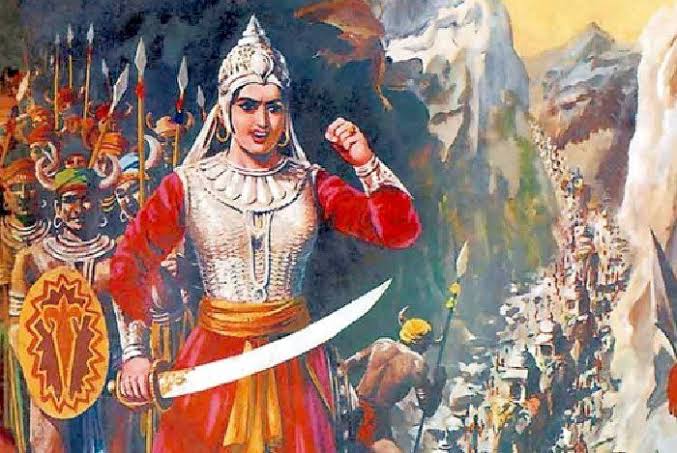
From the South of India, we come to Central India to find another brave Indian queen by the name of Rani Durgavati. Durgavati was born to the Chandela Rajput Clan. Her father was Keerat Rai and she was born at the Fort of Kalinjar, which falls in present-day Uttar Pradesh state.
She was married to Prince Dalpat Shah of the Gondwana kingdom and they had a son from this marriage. But Dalpat Shah died when his son was only five years old. So Rani Durgavati took the responsibility of ruling the kingdom herself and she strategically moved her capital to the Satpura Hill ranges, which falls presently in the Madhya Pradesh state of India, to have better defenses.
After a few years, Rani Durgavati was attacked by the ruler of Malwa called Baz Bahadur, who is mainly known for his famous affair with Roopmati. However, this attack was repulsed by the Rani. After this, in c. 1562, Malwa was captured by the Mughal Emperor Akbar, whose generals later attacked Durgavati because her kingdom touches their domain and Akbar wanted total control of the sub-continent.
The Rani was not frightened by the mighty Mughal army and she moved to a more secure position, from where she and her son carried on fighting. Though they repulsed the Mughal army several times, her son got injured and was carried off the battlefield. Rani Durgavati was badly injured too, and looking at imminent defeat, she killed herself – thereby holding on to her belief that it was better to die than capitulate to the enemy.
 Vishal Thakur