India is an Independent Country. Today we have world’s largest Democracy. Today we have freedom to do anything. But it was not always. Many people Sacrificed in liberating India. Of which we know about many people, but many such revolutionaries about whom we do not know anything.Today their name not found in any book of history.Today, in this blog, we will read about unsung heroes of Indian freedom struggle.
1. Vanchinathan
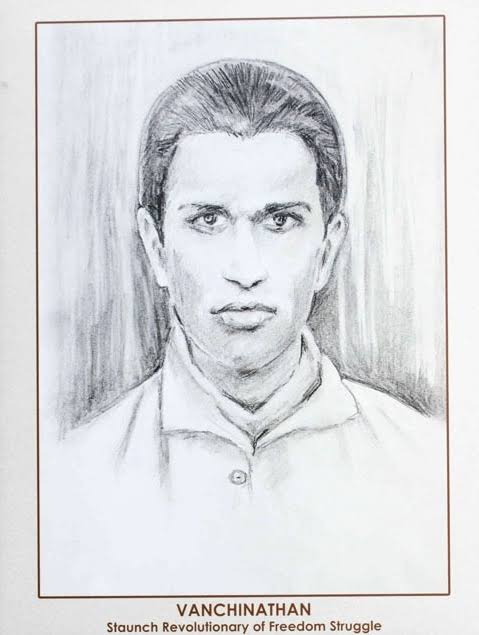
Vanchinatha Iyer (1886 – 17 June 1911), popularly known as Vanchinathan or Vanchi, was an Indian reactionary. He is best remembered for murdering Robert Ashe, the Tax Collector of Thirunelveli. On 17 June 1911, Vanchi who was 25, assassinated Robert Ashe, the district collector of Tirunelveli, who was also known as Collector Dorai. He shot Ashe at point-blank range when Ashe’s train had stopped at the Maniyachi Station, en route to Madras. He committed suicide thereafter. The railway station has since been renamed Vanchi Maniyachi.
After the shooting, Vanchinathan ran along the platform and took cover in the latrine. Sometime later he was found dead, having shot himself in the mouth. The pistol recovered from him was empty without any bullets as he just planned to kill himself after killing Ashe and had no intention to hurt anyone other than Ashe In his pocket was found the following letter:
I dedicate my life as a small contribution to my motherland. I am alone responsible for this.
The mlechas of England having captured our country, tread over the sanathana dharma of the Hindus and destroy them. Every Indian is trying to drive out the English and get swarajyam and restore sanathana dharma. Our Raman, Sivaji, Krishnan, Guru Govindan, Arjuna ruled our land protecting all dharmas, but in this land, they are making arrangements to crown George V, a mlecha, and one who eats the flesh of cows.
Three thousand Madrasees have taken a vow to kill George V as soon as he lands in our country. In order to make others know our intention, I who am the least in the company, have done this deed this day. This is what everyone in Hindustan should consider it as his duty.
I will kill Ashe, whose arrival here is to celebrate the crowning of cow-eater King George V in this glorious land which was once ruled by great samrats. This I do to make them understand the fate of those who cherish the thought of enslaving this sacred land.
I, as the least of them, wish to warn George by killing Ashe.
Vande Mataram. Vande Mataram. Vande Mataram
— sd/-, R. Vanchi Aiyar, Shencottah
2. V.V.S AIYER

Varahaneri Venkatesa Subramaniam Aiyar (2 April 1881 – 3 June 1925), also known as V. V. S. Aiyar, was an Indian revolutionary from Tamil Nadu who fought against British colonial rule in India. His contemporaries include Subramanya Bharathi and V.O. Chidambaram Pillai, who subscribed to militant forms of resistance against the British colonial government. He went into exile in Pondicherry, then under French rule, when his militant activities attracted a warrant for his arrest from the British colonial government.
Aiyar’s militant attitude prompted the British Raj in 1910 to issue a warrant for his arrest for his alleged involvement in an anarchist conspiracy in London and Paris. Aiyar resigned from the Lincoln’s Inn and escaped to Paris. Although he wished to remain in Paris as a political exile, he had to return to India. Aiyar landed in Pondicherry on 4 December 1910 disguised as a Muslim to escape arrest and remained there as exile. Aiyar remained in Pondicherry for over ten years. While in Pondicherry, Aiyar met with fellow revolutionaries Subramanya Bharathi and Aurobindo. In Pondicherry, Aiyar was involved in the plot to assassinate Ashe, the Collector of Tirunelveli. One of his students, Vanchinathan assassinated Ashe. Thus more trouble arose for Aiyar and his companion Subramanya Bharathi.On 22 September 1914 the German cruiser SMS Emden entered the Madras harbour and bombarded the city. The British colonial government blamed this on the activities of the exiles in Pondicherry, and urged the French Governor to deport Aiyar and his companions to Africa. The French police brought several charges against the revolutionaries, but failed to convict them. During this period Aiyar translated the Tirukkural into English. He later revealed that he wanted to leave a legacy behind if he were forced to leave the country.Aiyar returned to Madras after World War I and worked as the editor of the newspaper Desabhaktan (Patriot). He was arrested in 1921 on sedition charges and spent nine months in prison. While in prison Aiyar wrote the book A Study of Kamba Ramayana.
As a writer, Aiyar has often been referred to as the “founder” of the short story genre in Tamil.
3. U Tirot Sing
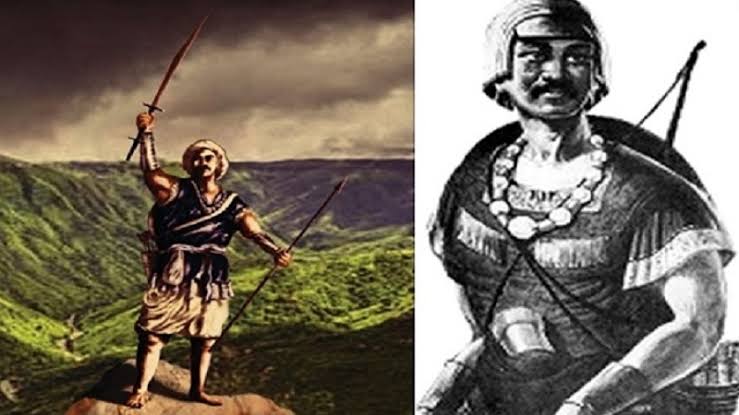
U Tirot Sing Syiem born in the year 1802 and died in the year 1835, was one of the chiefs of the Khasi people in the early 19th century. He drew his lineage from the Syiemlieh clan. He was Syiem (chief) of Nongkhlaw, part of the Khasi Hills. His surname was Syiemlieh. He was a constitutional head sharing corporate authority with his Council, general representatives of the leading clans within his territory. Tirot Sing declared war and fought against British for attempts to take over control of the Khasi Hills.
The entire North-East is proud of this warrior of Meghalaya. Tirot Singh blew the bugle against the British Empire at a very young age. He played brick by brick with about 10,000 of his fighters. By the way, Tirot Singh, who came from the Khasi community, was the king of Khadsawphra Siemship. But he was made very constitutionally seated in that position. His inner spirit was like that of a warrior. Raja Tirot Singh himself used to think day and night about the welfare of his subjects. That is why when the British, under the leadership of David Scott of the East India Company, proposed to him that they wanted to build a road to connect Guwahati with Sylhet, they welcomed that idea. Tirot Singh felt that this would benefit his community and he would be able to expand his business. He had a meeting with David Scott in his court in the year 1827. After a long discussion in this meeting, approval was given for the construction of a road from Rani to Nongkhlo near Guwahati to Surma Valley. When the construction of the road started, the bungalows of those people also came to Nongkhlo. For about 18 months, work proceeded smoothly and the officials mixed freely with the local tribals and maintained cordial relations. But, one day a Bengali servant told Tirot Singh that the British were planning to build this road and tax the local people and would subjugate them as soon as the road was completed.
It did not take long for Tirot Singh to understand the forgery of the British. They came to know that through this road the British wanted to carry out the abominable intention. He immediately asked everyone to vacate Nongkhlo. But the British ignored it. Tirot Singh got angry seeing this disobedience. After this, he along with some of his officers attacked the British on 4 April 1829. On the other hand, the British, seeing Tirot Singh’s displeasure, called their soldiers to Sylhet and Kamrup to save themselves and wanted to suppress their voice. But under the leadership of Tirot Singh, not much remained silent and he offered to wage war against the British. U Tirot Singh had only traditional warfare like arrow, spear, sword etc. They were not effective against the British gun and war strategy. Despite this, the fighters of the Khasi community under the leadership of Tirot Singh did not give up. He fought with the British for four years. Tirot Singh’s strength was continuously eroding. But they were not ready to bow down to the British. In injured condition, he went to the caves and took shelter. Unfortunately, one of his own deceived the British and he was forcibly surrendered on January 9, 1833.
Thereafter he was sent to Dhaka. Where he breathed his last on 17 July 1835 while in captivity. He is believed to have started having stomach troubles. Due to which he died. Today Tirot Singh is remembered along with the brave Indian warriors who never bowed their heads against the British of their own free will and stood firm despite the adverse wind. This genius of Meghalaya is also mentioned in the book ‘The History of Assam’ by British historian Sir Edward Gate and ‘Glimpses of the History of Assam Shillong in 1986’ by Professor PN Dutta. Apart from this, on this day people on social media are also paying tribute to Tirot Singh by remembering him and sharing the story related to him and saluting his bravery.
4. Karpoori Thakur
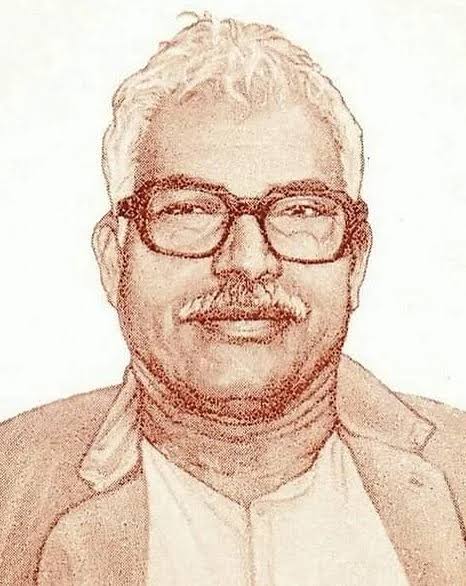
Karpoori Thakur (24 January 1924 – 17 February 1988) was an Freedom Fighter & Indian politician from the Bihar state. He was popularly known as Jan Naya. He served as the Chief Minister of Bihar from December 1970 to June 1971 (Socialist Party/Bharatiya Kranti Dal), and from December 1977 to April 1979 (Janata Party). He was influenced by nationalistic ideas as a student, and joined the All India Students Federation. As a student activist, he left his graduate college to join the Quit India Movement. For his participation in the Indian independence movement, he spent 26 months in prison. After India gained independence, Thakur worked as a teacher in his village’s school. He became a member of the Bihar Vidhan Sabha in 1952 from Tajpur constituency as a Socialist Party candidate. He was arrested for leading P & T employees during the general strike of the Central Government employees in 1960. In 1970, he undertook a fast unto death for 28 days to promote the cause of Telco labourers.Thakur served as the President of Samyukta Socialist Party. He is called a mentor to the prominent Bihari leaders such as Lalu Prasad Yadav, Ram Vilas Paswan, Devendra Prasad Yadav and Nitish Kumar.
5. Veer Kunwar Singh
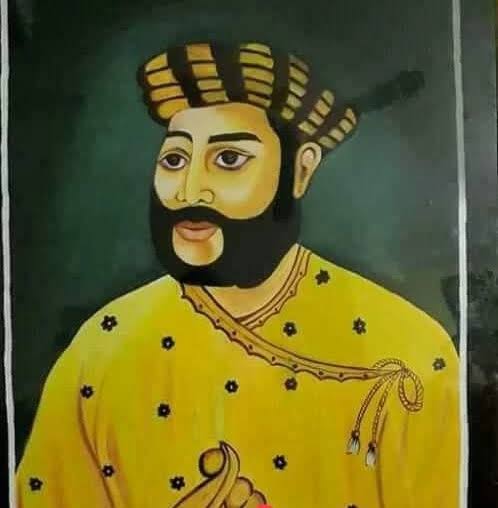
Hundreds of heroes and heroes had an important contribution in the independence of India. Thousands of heroes had donated their lives, in the revolution of 1857 against the British, one of these warriors was Babu Veer Kunwar Singh, 80 years old warrior of Bihar. Who, regardless of their age and aging body, had sounded the trumpet of revolution against the British. Years of slavery and British rule was at its peak at that time, it is about those days when the British rule was spread all around in India, gradually the voice against the British was being raised, all the kings and subjects came together as foreigners. were united against the robbers. One such name among these revolutionaries was Babu Veer Kunwar Singh, whose age could not reduce the spirit of his devotion. Veer Kunwar Singh is known as the hero of India’s first freedom struggle, who had the ability to fight and win even at the age of 80. Anti-injustice and freedom lover Babu Kunwar Singh was a skilled army hero. Despite his aging and deteriorating health, he never bowed down in front of the British, but faced them firmly. Veer Kunwar Singh belonged to the royal Ujjainiya Rajput family of Jagdishpur.
Heroes like Nana Saheb, Rani Laxmibai, Tatya Tope and Begum Hazrat Mahal fought against the British in their respective areas. The revolutionaries of Danapur in Bihar also revolted on 25 July 1857 and took control of Ara. Veer Kunwar Singh was leading these revolutionaries.When people in all parts of India were protesting against the British authorities in 1857, Babu Kunwar Singh had completed 80 years of his age. At this age he fought against the British East India Company. Despite the deteriorating health, when the message of fighting for the country came. Then Veer Kunwar Singh immediately got up and went to fight against the British army, while fighting he had displayed unwavering courage, patience and courage. Kunwar Singh was one of the most important and influential freedom fighters in the Sepoy Rebellion of 1857. Born in 1777, Kunwar Singh died in the revolt of 1857.
6. Jhalkari Bai
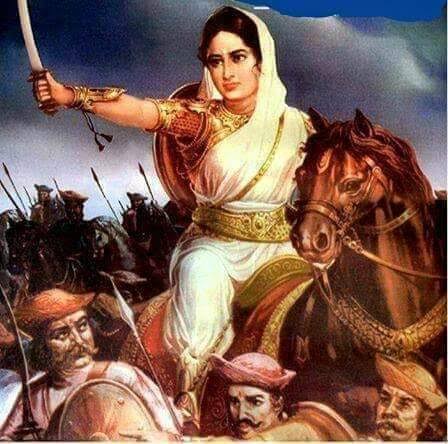
The name of Rani Laxmi Bai of Jhansi, who died for the country, is etched in everyone’s heart. Even if someone wants to forget, India cannot forget this mother’s daughter. But along with Rani Lakshmi Bai, there was another daughter of the country, who had neither the crown of the queen nor the power on her head, yet she fought hard for her soil and left her indelible mark on history. The heroine who not only participated in the revolt of 1857 but also did not care for her life to protect her countrymen and her queen. Jhalkari Bai was born on 22 November 1830 in a Koli family in Bhojla village near Jhansi, Uttar Pradesh. Jhalkari was as brave as she was married to a brave soldier. This brave soldier was Puran, who was famous for his bravery in the army of Jhansi. After marriage, when Jhalkari came to Jhansi, once on the occasion of Gauri Puja, along with other women of the village, she also went to the fort of Jhansi to pay respect to the queen. When Rani Lakshmibai saw him there, she was stunned. Jhalkari looked exactly like Rani Laxmibai. At the same time, when the queen heard the stories of Jhalkari’s bravery, she was so impressed by her that she immediately ordered Jhalkari to join the Durga Sena. But it was Jhalkari’s strategy to keep the British entangled and Rani Lakshmi Bai got more time to gather strength.
During the Revolt of 1857, General Huroj with his huge army attacked Jhansi on 23 March 1858. The queen valiantly faced the huge army from her army. The queen was waiting for help from the Peshwa at Kalpi but could not get any help, as Tatyan Tope had been defeated by General Huroz. Soon the English army entered Jhansi and the queen started fighting with her life to save her people. In such a situation, Jhalkari Bai decided to fight, claiming herself as a queen, to save the life of Rani Laxmibai. He kept the entire English army in confusion so that Rani Laxmibai could get out safely.
According to a Bundelkhandi story, Rani Lakshmi Bai disguised as Jhalkari Bai came out of the fort to meet her in the camp of British General Hughes. On reaching the British camp she shouted that she wanted to meet General Rose. Rose and her soldiers were delighted that not only had they captured Jhansi but the surviving queen was also in their possession. General Huroz (who thought she was a queen) asked Jhalkari Bai what should be done to her? So he said firmly, even if you hang me. Impressed by this courage and leadership ability of Jhalkari, General Huroes said, “If even one percent of India’s women become like him, the British government will have to leave India soon.”
So these were some freedom fighters whose names have been forgotten by history. They had great contribution in the independence of India:
 Vishal Thakur